
What is a smart street light gateway?

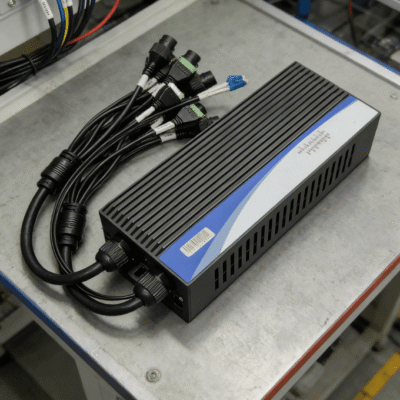
I have analyzed urban infrastructure for a decade and observed the transformation of municipal lighting. To answer the question what is a smart street light gateway, we must view it as the central communication hub of a smart city. It acts as a bridge between individual street light controllers and a centralized management platform. This device translates local data into actionable insights for city operators. A smart street light gateway is an industrial-grade node that enables remote control, energy monitoring, and automated dimming for thousands of lamps.
The primary function of this technology is to manage the complex data flow in a public lighting network. Without a gateway, city lights operate on simple timers or manual switches. With a smart street light gateway, every lamp becomes part of a responsive ecosystem. Data from the International Energy Agency suggests that smart control systems can reduce street lighting electricity usage by 30% to 40%. This efficiency is achieved through real-time adjustments based on traffic, weather, and ambient light levels.
Choosing the right gateway is critical for the long-term success of any smart city project. It must withstand harsh outdoor environments while providing stable connectivity through 4G, Ethernet, or RS485. In the following sections, I will explain the technical architecture and the specific benefits of these devices. By the end of this guide, you will understand the essential role this hardware plays in modern urban planning. Let us dive into the mechanics of smart lighting communication.
Why Cities Require a Smart Street Light Gateway?
Municipalities face increasing pressure to lower carbon emissions and reduce operational costs. A smart street light gateway provides the necessary visibility into the power grid to achieve these goals. It eliminates the need for manual inspections by providing instant fault alerts to maintenance crews. I believe that the transition to intelligent gateways is the most cost-effective step toward a sustainable city.
Reducing Urban Energy Consumption
The most immediate benefit is the massive reduction in wasted electricity. Gateways allow for granular dimming schedules that traditional systems cannot provide.
- Dynamic Dimming: Lowering light levels during low-traffic hours (e.g., 2 AM to 4 AM).
- Solar Tracking: Automatically adjusting “on” times based on actual sunrise and sunset data.
- Sensor Integration: Increasing brightness only when motion is detected on a sidewalk.
Energy savings directly translate to lower municipal budgets and a smaller environmental footprint.
Optimizing Maintenance and Repair Cycles
Traditional lighting maintenance relies on citizen reports or scheduled drive-bys to find broken bulbs. A smart street light gateway monitors the electrical current of every lamp in its network.
- Instant Alerts: Operators receive an email or SMS the moment a light fails.
- Predictive Analytics: The system identifies lamps that are consuming unusual amounts of power before they burn out.
- GPS Localization: Maintenance teams are sent directly to the correct pole with the right spare parts.
Data indicates that gateway-driven maintenance can reduce labor costs by up to 25% annually.
Key Technical Features of a Smart Street Light Gateway
To understand what is a smart street light gateway, we must examine its internal communication protocols. These devices are designed to handle multiple inputs and outputs simultaneously. I have found that the best gateways utilize a combination of long-range and short-range wireless technologies. This ensures that the system stays online even if one network signal is weak.
Multi-Protocol Communication Support
A robust gateway must “speak” several languages to interact with different sensors and meters.
- RS485/Modbus: Used for reading high-precision electricity meters and local sensors.
- Ethernet (RJ45): Provides a high-speed wired backhaul for data transmission in urban centers.
- 4G LTE / 5G: Ensures connectivity in remote areas where fiber optics are not available.
Protocol versatility is the foundation of a scalable smart lighting network.
Industrial-Grade Durability and Protection
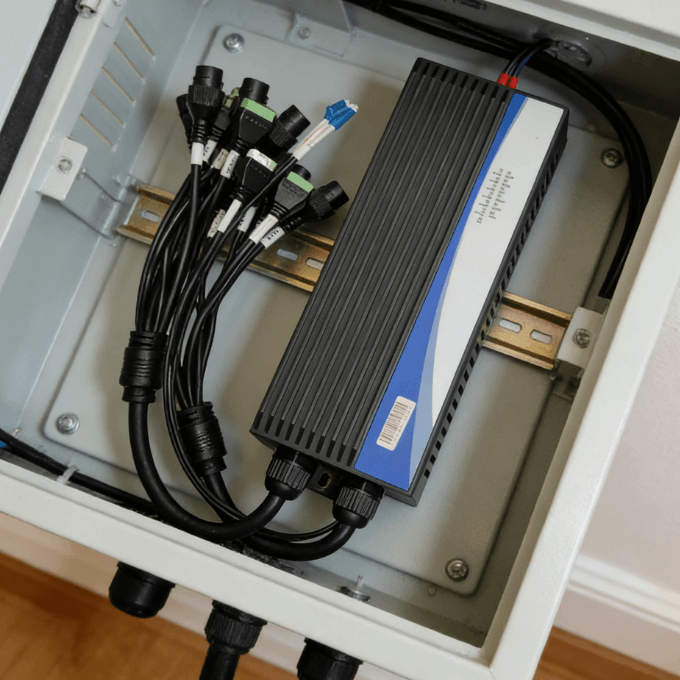
Street light cabinets are exposed to extreme heat, humidity, and electrical surges. A reliable smart street light gateway must be built with a hardened metal shell.
- Wide Temperature Range: Reliable operation from -40°C to +80°C.
- Surge Protection: Built-in safeguards against lightning strikes and power grid fluctuations.
- EMC Compatibility: Ensuring the gateway does not interfere with other city wireless signals.
I always recommend checking for industrial certifications before deploying hardware in a public setting. Reliability is more important than initial cost when managing critical infrastructure.
How Smart Gateways Enable Edge Computing?
Modern gateways do more than just pass data to the cloud; they process it locally. This is known as edge computing. By making decisions at the pole level, the smart street light gateway reduces the load on central servers. I have seen this capability prevent system-wide outages during network disruptions. Local intelligence is what truly makes a city “smart.”
Real-Time Local Logic Execution
If the connection to the central server is lost, the gateway continues to run its pre-programmed schedules.
- Autonomous Control: The gateway can trigger “emergency on” modes if it detects a local sensor failure.
- Data Filtering: Instead of sending every minute of data, it only sends significant changes to the cloud.
- Latency Reduction: Local sensors (like motion detectors) can trigger lights in milliseconds without waiting for a server response.
Edge computing ensures that public safety is never dependent on a 4G signal.
Integrating Environment Monitoring Sensors
The gateway often serves as a mounting point for other smart city applications. Because the smart street light gateway has constant power and connectivity, it can host environmental sensors.
- Air Quality Monitoring: Measuring PM2.5 and CO2 levels in real-time.
- Noise Level Sensing: Identifying areas with excessive urban noise for city planning.
- Weather Stations: Collecting localized wind speed and humidity data.
This multi-functional approach allows cities to leverage their lighting infrastructure for broader data collection goals.
Choosing the Best Smart Street Light Gateway for Your Project
Selecting hardware depends on the density of your lighting network and the required sensor integration. You must judge the device based on its port density and software flexibility. If you need to connect multiple RS485 meters and external antennas, look for high-performance industrial models. A compact design is also essential for fitting into existing electrical cabinets.
When evaluating a Smart Street Light Gateway Model SIE2000Z1, consider its high-speed processing capabilities. This model is designed for high-density environments where thousands of data points are collected every hour. It features a robust metal housing and supports 4G LTE for seamless cloud connectivity. Hardware like the SIE2000Z1 is built for developers who need a programmable platform for complex urban logic.
In my professional opinion, the best judgment factor is “Scalability.” You should choose a gateway that allows for future software updates without needing a physical hardware swap. Ensure the manufacturer offers technical support for protocol integration. A smart street light gateway is a long-term investment. Choosing a reliable, multi-interface device today will prevent expensive upgrades over the next decade. Always prioritize hardware that offers open communication standards to avoid vendor lock-in.
Summary
In conclusion, to answer what is a smart street light gateway, it is the essential communication and control node of modern urban lighting. It provides the connectivity needed for remote dimming, fault monitoring, and energy savings of up to 40%. By utilizing industrial-grade hardware with edge computing capabilities, cities can build a resilient and efficient infrastructure. Investing in a high-quality gateway is the most critical decision for any municipality aiming for sustainability and public safety.
FAQ
1. Can a smart street light gateway work with older LED lights?
Yes, most gateways are compatible with existing LED lights provided they have a compatible 0-10V or DALI dimming driver. The gateway connects to the lamp’s individual controller to send commands. This allows cities to upgrade their lighting intelligence without replacing the entire physical lamp post.
2. What happens if the 4G signal goes down?
The smart street light gateway features edge computing logic, allowing it to function autonomously. It will continue to follow the last downloaded schedule stored in its local memory. Once the network is restored, it will sync its logged energy data back to the central platform.
3. How many lights can a single smart street light gateway control?
A single gateway can typically manage between 50 and 200 light nodes, depending on the communication technology (like Zigbee or PLC). In an RS485 configuration, it depends on the number of addressable devices on the bus. For large cities, multiple gateways are deployed in a mesh or star network.
4. Is the data sent by the gateway secure?
Yes, professional-grade gateways use encrypted protocols like VPN, IPsec, or TLS for data transmission. This prevents unauthorized users from taking control of the city’s lighting network. Security is a non-negotiable standard for public infrastructure gateways.
5. How long is the lifespan of a smart street light gateway?
Industrial gateways are designed to last between 8 and 10 years in outdoor environments. They use high-quality capacitors and fanless cooling to minimize mechanical failure. Choosing a gateway with a wide operating temperature range ensures it survives both extreme summer heat and winter freezes.
Reference Sources
IEEE Standards Association – Smart City Lighting and Communication Standards
International Energy Agency (IEA) – Energy Efficiency in Public Lighting
International Electrotechnical Commission (IEC) – Industrial Gateway Reliability