
How to integrate Modbus with smart controllers?

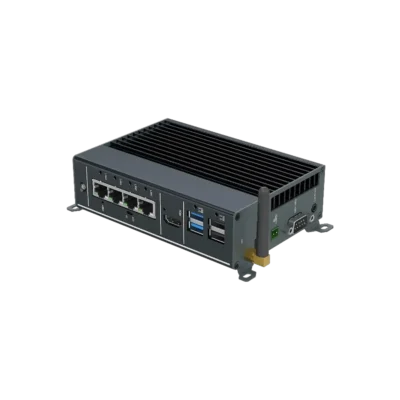
In my years as an automation strategist, I have found that Modbus remains the most vital protocol for industrial networking. To answer the question of how to integrate Modbus with smart controllers, you must focus on three layers: physical connection, protocol configuration, and data processing logic. Integration starts by selecting the correct hardware interface, typically RS485 for RTU or Ethernet for TCP. You then define the controller as either a Master (Client) or Slave (Server) to establish the communication hierarchy.
The process requires precise mapping of Modbus registers to the internal variables of your smart device. You must identify the address offsets for coils, discrete inputs, holding registers, and input registers. A successful integration ensures that data flows seamlessly between field sensors and your high-level logic. Modern systems now utilize an industrial controller with Modbus RTU TCP support to handle mixed environments. This allows the controller to bridge legacy serial devices with modern cloud-based analytics.
Reliability in integration depends heavily on error handling and polling frequency optimization. I have seen many projects fail because engineers ignored timeout settings or CRC validation. Smart controllers must be programmed to handle communication drops gracefully. This ensures that your automation system remains safe even during network instability. By following standardized steps, you can turn a basic controller into a powerful node for industrial data acquisition.
The Architecture of an Industrial Controller with Modbus RTU TCP Support
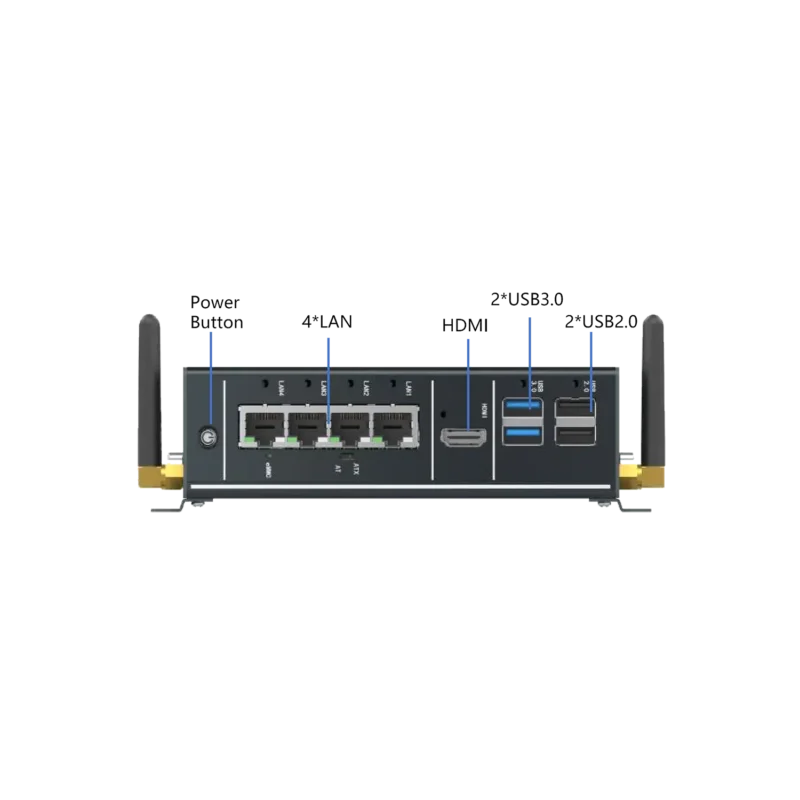
An industrial controller with Modbus RTU TCP support acts as the central hub for factory data. It allows for the simultaneous management of local serial networks and wide-area Ethernet connections. I believe that understanding the hardware architecture is the first step toward a robust integration. These controllers often feature isolated RS485 ports to protect against electrical surges in industrial environments. They also include RJ45 ports for high-speed Modbus TCP communication over standard IT infrastructure.
Hardware Wiring and Signal Integrity
Proper wiring is the physical foundation of any Modbus RTU integration. You must use twisted-pair cables with shielding to prevent electromagnetic interference. Termination resistors, usually 120 ohms, should be placed at both ends of a long RS485 daisy chain. In my experience, skipping these resistors leads to signal reflection and intermittent data errors. For Modbus TCP, ensuring your network switches support the required bandwidth is equally important for low-latency control.
Register Mapping and Data Consistency
Data types in Modbus can be tricky because the protocol only understands 16-bit registers. To read 32-bit floating-point numbers or integers, you must combine two consecutive registers. You must also determine the “Endianness” or byte order used by the slave device. Incorrect byte swapping will result in corrupted or nonsensical data values. Standardizing your register map is essential for maintaining data consistency across your entire control network.
Integrating a Programmable Intelligent Controller for Edge Computing
A programmable intelligent controller for edge computing changes how we handle Modbus data. Instead of sending raw packets to a distant server, the controller processes information locally. This reduces latency and saves expensive bandwidth in IoT applications. I have seen this approach revolutionize remote monitoring stations. The controller can filter noise and only report significant changes to the central management system.
Local Logic Execution and Latency Reduction
By running logic at the edge, you can trigger immediate actions based on Modbus inputs. For example, if a Modbus-connected temperature sensor exceeds a limit, the controller shuts down the machine. This happens in milliseconds without waiting for a cloud response. Edge computing ensures that critical safety functions are never dependent on an active internet connection. Programmable controllers provide the flexibility to write these complex scripts in languages like Python or C.
Data Aggregation for IIoT Applications
Edge controllers excel at aggregating data from multiple Modbus slaves into a single stream. They can convert Modbus RTU packets into JSON or MQTT formats for cloud compatibility. This makes the programmable intelligent controller for edge computing a perfect gateway for smart factories. It allows legacy hardware to participate in modern Industry 4.0 ecosystems. You can also implement local data logging to prevent information loss during network outages.
Benefits of Customizable Industrial Control System Solutions
Every factory has unique requirements that off-the-shelf products often fail to meet. This is why customizable industrial control system solutions are becoming the industry standard. Customization allows you to define specific I/O counts and protocol support tailored to your project. You can choose controllers that fit specific rail mounts or specialized power requirements. Flexibility in software is just as important as hardware modularity.
Scalability in Large-Scale Modbus Networks
As your facility grows, your control system must expand without a complete overhaul. Customizable solutions allow you to add more Modbus nodes easily. You can segment your network into different branches to optimize polling speeds. I have managed systems with over 200 Modbus devices connected to a single intelligent hub. Scalability ensures that your initial investment remains valuable as your automation needs evolve.
Tailored Protocol Conversion and Gateway Functions
A customizable system can act as a bridge between Modbus and other protocols like CANbus or BACnet. This is vital for facilities that use mixed equipment from different eras. You can program the controller to act as a Modbus Master for one branch and a Slave for another. This “multi-protocol” capability simplifies your network architecture. It reduces the number of individual gateways you need to manage.
Finding a Reliable Supplier of SIE Series Controllers
Selecting a reliable supplier of SIE series controllers is a long-term strategic decision. The quality of the controller determines the uptime of your entire production line. I recommend looking for suppliers that offer extensive technical documentation and local support. SIE series controllers are known for their high port density and ruggedized design. They are built to survive the high vibrations and temperatures of real-world industrial sites.
Technical Support and Firmware Stability
A good supplier provides regular firmware updates to improve security and performance. They should also offer software tools that simplify the Modbus configuration process. I have found that having access to a responsive support team saves days of debugging. Technical support is the most underrated factor when purchasing industrial automation hardware. Ensure your supplier understands the nuances of Modbus integration and edge logic.
Industrial Certification and Reliability Testing
Reliable controllers must pass rigorous testing for electromagnetic compatibility (EMC) and vibration. You should check for certifications that prove the device is suitable for your specific industry. For example, environmental monitoring requires high accuracy in analog-to-digital conversion. SIE series controllers often feature high-bit-rate ADCs for precise sensing. This level of hardware quality is what defines a professional-grade intelligent controller.
Choosing the Right Controller for Modbus Integration
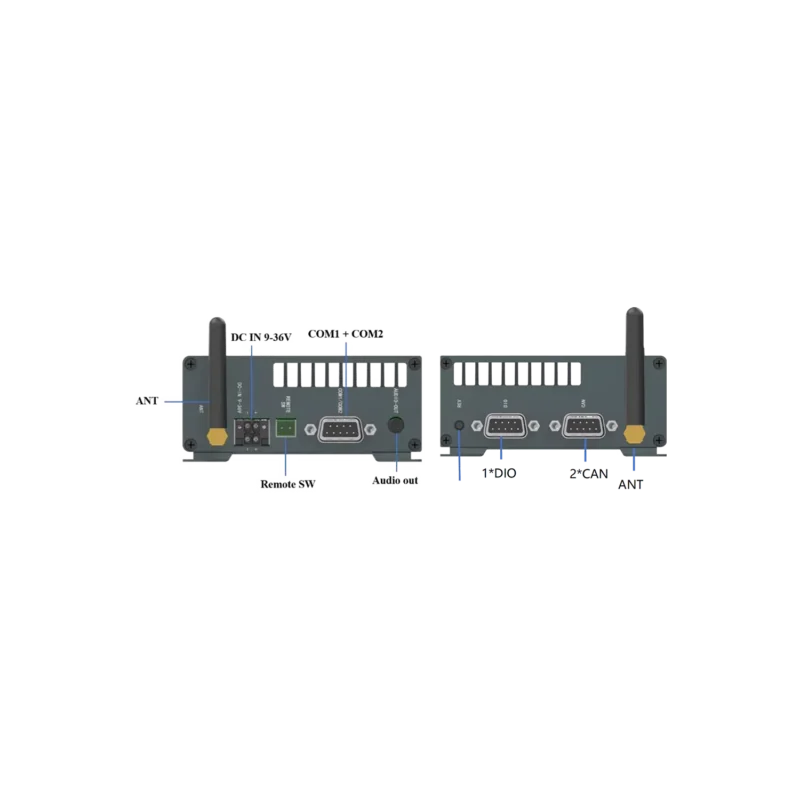
Deciding on a controller depends on your I/O requirements and the complexity of your logic. If you need a mix of digital and analog signals with robust networking, the Industrial Intelligent Controller Model SIE2000K4 is an excellent choice. This model supports RS485 and RS232, making it compatible with almost any Modbus RTU device. It also includes 4G and Ethernet connectivity for seamless Modbus TCP integration.
In my professional opinion, the SIE2000K4 stands out due to its wide range of interfaces. It features 4 digital inputs, 4 digital outputs, and 4 analog inputs, alongside 2 analog outputs. This high I/O density reduces the need for external expansion modules. The SIE2000K4 is designed for developers who need a programmable platform for edge analytics. Its ability to operate in temperatures from -40°C to 80°C makes it a true industrial powerhouse.
When judging a controller’s value, consider the software environment. A controller that supports standard programming tools is easier to maintain than one with a proprietary, closed system. The SIE2000K4 offers the flexibility needed for customizable industrial control system solutions. It allows you to build a system that is perfectly sized for your current task while leaving room for future growth. Always prioritize a reliable supplier of SIE series controllers to ensure your project’s long-term success.
Summary
In conclusion, how to integrate Modbus with smart controllers requires a focus on physical layer integrity and precise register mapping. Using an industrial controller with Modbus RTU TCP support allows you to bridge different communication standards efficiently. A programmable intelligent controller for edge computing adds the benefit of local data processing and improved system safety. By selecting customizable industrial control system solutions from a reliable supplier of SIE series controllers, you ensure a future-proof automation network.
FAQ
1. What is the main difference between Modbus RTU and Modbus TCP integration?
The primary difference lies in the physical layer and the addressing. Modbus RTU uses serial connections (RS485/RS232) and relies on Slave IDs for device identification. Modbus TCP uses Ethernet and identifies devices via IP addresses. RTU is generally slower but more robust for long-distance serial chains, while TCP is faster and easier to integrate into existing IT networks.
2. Can I connect multiple Modbus RTU devices to one smart controller?
Yes, you can connect multiple devices using an RS485 daisy-chain configuration. Each device must have a unique Slave ID (from 1 to 247). However, you must ensure that all devices share the same baud rate, parity, and stop bits. The smart controller acts as the Master and polls each device sequentially to gather data.
3. Why do I need termination resistors for Modbus RTU?
Termination resistors prevent signal reflections on long RS485 communication lines. Without them, the high-speed electrical signals can “bounce” back from the end of the wire, causing data corruption. You should place a 120-ohm resistor across the A and B lines at the two furthest points of the network. This simple step is crucial for maintaining high-speed reliability.
4. What is a Modbus register map, and why is it important?
A register map is a document provided by the manufacturer that lists the addresses of all internal data points. It tells you where to find specific variables, such as temperature or pressure readings. Without this map, you cannot know which register to read from or write to. Accurate register mapping is the most important part of the software configuration phase.
5. How does edge computing help with Modbus data management?
Edge computing allows the controller to analyze Modbus data locally before sending it to the cloud. It can perform calculations, check for alarm conditions, and store data during network outages. This reduces the amount of traffic on your main network and ensures the system can react to events even if the cloud connection is lost.
Reference Sources
Modbus Organization – The Official Modbus Protocol Specifications
IEEE Xplore – Research on Industrial Communication and Protocol Integration
International Society of Automation (ISA) – Standards for Industrial Control Systems
ARC Advisory Group – Trends in Edge Computing and Industrial IoT